Sustainable business operations, environmental preservation, and worker health and safety all depend on waste management. Although waste is produced in every workplace, the kind and degree of danger might differ significantly based on the industry, products, procedures, and working conditions.
Every waste stream, including regular workplace trash, chemicals, contaminated materials, medical waste, hydrocarbons, construction debris, and electronic equipment, needs to be identified, separated, stored, handled, transported, treated, recycled, and disposed of properly.
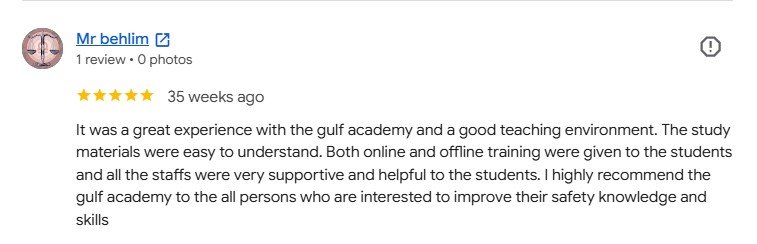
The HSE waste management training offered by Gulf Academy Safety is intended to assist professionals in comprehending these concepts and gaining useful skills for handling waste-related risks at work.
Professionals in charge of waste management, facility management, site operations, environmental performance, health and safety, or compliance can benefit from the training.
Training in waste management offers organized information on how garbage should be recognized, categorized, controlled, stored, handled, and managed over the course of its lifecycle.
Eliminating undesired products from a workplace is only one aspect of effective waste management. Organizations must comprehend where trash is produced, the risks it poses, how to separate it, and what controls are required to protect people and the environment.
A comprehensive waste management certification can help learners develop awareness of:
Workplace garbage comes from a variety of sources and categories.
Both hazardous and non-hazardous waste
Waste identification and segregation
Safe handling and collection
Temporary storage of waste
Transportation needs
Opportunities for recycling and recovery
Waste management and elimination
Preventing pollution
Response to emergencies
Environmental obligations
Risk assessment in the workplace
Efficiency of resources and waste reduction
Professionals can support safer and more ecologically conscious operations by comprehending the full waste lifecycle.
Numerous environmental and occupational risks can arise from improper garbage management. For instance, hazardous reactions may occur when incompatible chemical wastes are kept together. Liquids that are not properly controlled may seep into drainage systems or soil. Workers may get hurt or infected by sharp or contaminated items. While unchecked garbage accumulation can lead to trip hazards, pest issues, and unsanitary conditions, flammable waste can raise the risk of fire.
Organizations can address these hazards before they become incidents by implementing a systematic waste management strategy.
Good waste management can help:

Workers may be exposed to environmental, chemical, biological, or physical risks when handling, collecting, transporting, or processing garbage. Unnecessary exposure can be decreased with the right controls.
Appropriate waste management promotes ethical environmental practices and lessens soil, water, and air contamination.
Regarding hazardous materials, environmental protection, waste transportation, storage, treatment, and disposal, organizations may have particular obligations. Training can assist pertinent staff members in comprehending their duties within the relevant jurisdiction and workplace.
Organizations can increase operational efficiency by recovering recyclable resources, reusing materials, and reducing waste at the source.
By promoting prudent resource use and pollution reduction, waste management can support broader environmental and sustainability goals.
The organizational and practical facets of safe waste management can be covered in a thorough training program.
Knowing what waste is and where it originates is the first step. Participants can investigate several sources of garbage, such as:
Determining the proper control measures is made simpler when the source of waste is understood.
The degree of risk associated with garbage varies.
General, recyclable, organic, hazardous, clinical, chemical, electronic, industrial, and other specialist categories can all be classified as waste.
Accurate classification is crucial since it affects the appropriate level of waste:
Disposed of. Training can assist professionals in understanding how improper classification can lead to additional environmental and safety hazards.
Because hazardous trash may have characteristics that could endanger people or the environment, it needs extra care.
Some examples could be:
The concepts that professionals must comprehend when handling potentially hazardous trash are the main emphasis of our hazardous waste management course.
Identification of hazards
Classification of waste
Separation
Selection of containers
Labeling
Secure storage
Managing processes
Preventing spills
Equipment for personal protection
Response to emergencies
Transportation-related factors
Handling and getting rid of
Environmental regulations
The goal is to assist employees and managers in identifying possible risks and implementing suitable workplace controls.
One of the essential components of a successful waste management system is waste segregation. It is not appropriate to automatically combine different waste streams. Combining contaminated or unsuitable materials can raise risks and complicate disposal, treatment, and recycling.
Organizations can benefit from effective segregation practices:
Avoid cross-contamination
Lower the dangers of exposure
Boost recycling
Keep dangerous items apart.
Boost cleanliness
Cut down on disposal expenses
Facilitate the identification of waste
Encourage safer medical care and transportation
Additionally, storage spaces need to be well maintained. Containment, access control, ventilation, weather protection, labeling, emergency equipment, and fire prevention may be taken into account, depending on the type of waste.
Professionals can learn how workplace trash impacts the environment by taking an environmental waste management course.
Environmental waste management takes into account the waste’s whole journey, from the point of generation to its ultimate treatment, recovery, recycling, or disposal.
Key areas consist of:
Preventing pollution
Reduction of waste
Conservation of resources
Recycling
Reuse and Recovery
Evaluation of environmental risks
Preventing contamination
Appropriate disposal
Eco-friendly work methods
The emphasis goes beyond just getting rid of waste. Additionally, it aims to minimize needless waste and, whenever feasible, protect the environment.
Whether trash may be prevented or minimized before disposal is required should be taken into account in a solid waste management plan.
Businesses can look at chances to:
Avoid needless waste
Minimize the production of waste
Reuse appropriate materials
Recycle materials that can be recovered.
Retrieve valuable resources
Handle garbage properly
Properly dispose of any leftover garbage.
Instead of depending solely on disposal at the end of the process, this method pushes firms to consider trash before it is formed.
Different waste streams are produced by different industries. As a result, there can be wide variations in the hazards and controls associated with waste management.
Large amounts of garbage can be produced throughout the excavation, demolition, installation, maintenance, and finishing phases of construction projects.
Typical materials could consist of:
Bricks made of concrete
Wooden Metals
Polymers
Packaging
Glass
Paint supplies
Adhesives
Materials that are contaminated
Chemicals for construction
Project teams may enhance segregation, storage, material recovery, recycling, and responsible disposal with the aid of efficient construction waste management.
Additionally, it can improve housekeeping and lessen the risks brought on by an unchecked build-up of waste and building materials.
Complex waste streams can be produced by the oil and gas industry as a result of exploration, drilling, production, maintenance, processing, and equipment cleaning.
Possible waste could consist of:
Materials polluted with hydrocarbons
Used oils
Chemical leftovers
Waste associated with drilling
Soil contamination
Filters
Sludge
Packaging for industrial use
Equipment for personal protection
Waste from maintenance
The features and risks connected to each waste stream must be carefully taken into account while managing oil and gas waste.
Separation, containment, spill prevention, handling, storage, emergency protocols, and suitable treatment or disposal routes may all need to be understood by professionals.
Waste from industrial establishments may need to be managed specifically.
Chemical residues, contaminated containers, oils, solvents, process residues, and other hazardous chemicals are a few examples.
Choosing a disposal strategy is only one aspect of understanding industrial hazardous waste disposal. First and foremost, waste needs to be accurately recognized and categorized. Then, throughout its management lifecycle, the proper controls should be put in place.
Professionals can learn why trash should be handled properly through training:
Identified
Classified
Segregated
Contained
Labeled
Stored
Transported
Treated
Disposed of
Additionally, organizations should make sure that their disposal plans adhere to the relevant environmental and regulatory standards for the waste kind and location.
General, recyclable, chemical, liquid, packaging, metal, plastic, and process-related waste can all be produced by manufacturing processes.
Workplace safety and environmental performance can both benefit from manufacturing waste management.
An organized strategy can assist businesses in locating waste production sites and looking at ways to:
Waste management can therefore become part of a broader operational improvement strategy rather than being treated solely as a disposal activity.
Chemical waste requires careful handling because different substances can have different physical, chemical, and health hazards.
Potential concerns can include:
Chemical waste management training can help professionals understand the importance of identifying chemical waste and keeping incompatible materials appropriately separated. Safe storage, labeling, containment, spill response, PPE, and emergency procedures are important considerations when managing chemical waste.
Healthcare facilities generate waste that may present biological, sharps, pharmaceutical, chemical, and other hazards.
Medical and clinical waste management requires careful segregation and controlled handling to protect healthcare workers, patients, waste handlers, visitors, and the environment.
Potential waste streams may include:
General, recyclable, chemical, liquid, packaging, metal, plastic, and process-related waste can all be produced by manufacturing processes.
Workplace safety and environmental performance can both benefit from manufacturing waste management.
An organized strategy can assist businesses in locating waste production sites and looking at ways to:
Appropriate segregation at the point of generation is an important part of reducing unnecessary exposure and preventing contamination.
Electronic equipment has become an important source of waste across offices, industries, educational institutions, healthcare facilities, and households.
E-waste management involves responsible approaches to collecting, segregating, storing, recovering, recycling, and disposing of unwanted electronic equipment.
Responsible e-waste practices can help organizations recover useful materials while reducing inappropriate disposal and potential environmental impacts.
Waste management does not end when waste leaves the workplace.
Depending on the waste type and local requirements, organizations may need to consider how waste is packaged, labeled, loaded, transported, transferred, treated, recycled, or disposed of.
Personnel responsible for waste management should understand the importance of maintaining appropriate controls throughout this process.
For hazardous waste in particular, organizations should work with appropriately authorized and qualified service providers where required and maintain relevant documentation and records.
Waste-related incidents can include:
Emergency planning should consider the types of waste present at the workplace and the potential consequences of an incident. Training can help personnel understand their role in:
Emergency procedures should always be aligned with the organization's risk assessment and applicable requirements.
Risk assessment is an important part of effective HSE management.
Before introducing or changing a waste management process, organizations can evaluate:
Identify the materials, quantities, sources, and characteristics of the waste.
Consider physical, chemical, biological, environmental, fire, manual handling, and other relevant hazards.
This may include employees, contractors, waste handlers, visitors, transport personnel, and members of the public.
Review existing segregation, storage, PPE, engineering controls, procedures, training, and emergency arrangements.
Apply appropriate measures according to the organization's risk assessment and applicable requirements.
Effective waste management requires more than employee awareness. Organizations need systems that define responsibilities and provide clear procedures.
A workplace waste management system may include:
Understand the different waste streams produced by the organization.
Establish clear methods for separating different categories of waste.
Provide appropriate designated areas and containers.
Ensure employees understand their responsibilities.
Identify opportunities to prevent unnecessary waste.
Determine which materials can be recovered or recycled.
Use appropriate treatment and disposal routes.
Regularly review waste areas, containers, labeling, housekeeping, and procedures.
Maintain relevant records and demonstrate appropriate management practices.
Waste management training can be relevant to professionals across a wide range of industries and roles.
It may be suitable for:
HSE Managers
HSE Officers
Safety Officers
Environmental Officers
EHS Professionals
Site Managers
Construction Managers
Supervisors
Facility Managers
Operations Managers
Maintenance Professionals
Waste Management Personnel
Sustainability Professionals
Environmental Consultants
Healthcare Professionals
Industrial Personnel
Oil and Gas Professionals
Manufacturing Professionals
It can also benefit professionals who want to expand their knowledge beyond general occupational safety and develop a stronger understanding of environmental risk management.


We offer certifications that cover the full spectrum of Health and Safety in Logistics and Transport, providing the “proof” you need to demonstrate due diligence.
Environmental responsibility and workplace safety are closely connected in many industries.
Professionals who understand waste management can contribute to activities such as:
Workplace inspections
Environmental risk assessments
Waste auditsSafety procedures
Environmental management systems
Contractor management
Waste segregation programs
Incident prevention
Pollution prevention
Sustainability initiatives
Compliance activities
Adding waste management knowledge to your professional skill set can complement broader HSE, environmental, and occupational safety qualifications.
Professionals searching for NEBOSH waste management training are often looking to connect environmental responsibilities with broader health and safety knowledge.
NEBOSH qualifications can provide wider knowledge in areas such as risk management, workplace hazards, environmental management, and organizational controls, depending on the qualification selected.
Waste management may form part of an organization’s wider HSE and environmental responsibilities, particularly where hazardous substances, pollution risks, industrial processes, or environmental impacts are involved.
Gulf Academy Safety offers a range of NEBOSH and other professional HSE training options for individuals seeking to strengthen their workplace safety and environmental knowledge.
A waste management certification can provide evidence that a learner has completed relevant training and developed knowledge in waste management principles.
When selecting training, professionals should consider whether the course content matches their role, industry, responsibilities, and career objectives.
For organizations, structured training can also help ensure that employees responsible for waste-related activities have a consistent understanding of workplace procedures.
At Gulf Academy Safety, we focus on professional training that helps learners develop practical knowledge relevant to today’s workplace.
Our training portfolio covers areas including:
Sustainability
Professional safety development
Our courses are designed for professionals and organizations across industries where health, safety, environmental protection, and operational responsibility are important.
Whether you are building your HSE career, strengthening your environmental knowledge, or developing workplace safety competencies, Gulf Academy Safety can help you identify suitable training options.
Effective waste management protects more than the workplace. It can help protect employees, communities, natural resources, and the environment.
Develop practical knowledge in waste identification, hazardous waste control, segregation, safe handling, environmental protection, and responsible disposal.
Whether your focus is construction waste management, oil and gas waste management, manufacturing waste management, chemical waste management, medical and clinical waste management, or e-waste management, the right training can help you approach waste-related risks with greater awareness and confidence.
Take the next step toward stronger HSE and environmental knowledge with Gulf Academy Safety.
Contact Gulf Academy Safety today to learn about available training options, course details, upcoming batches, and enrollment.
Act now. Because in logistics, safety is the only destination.