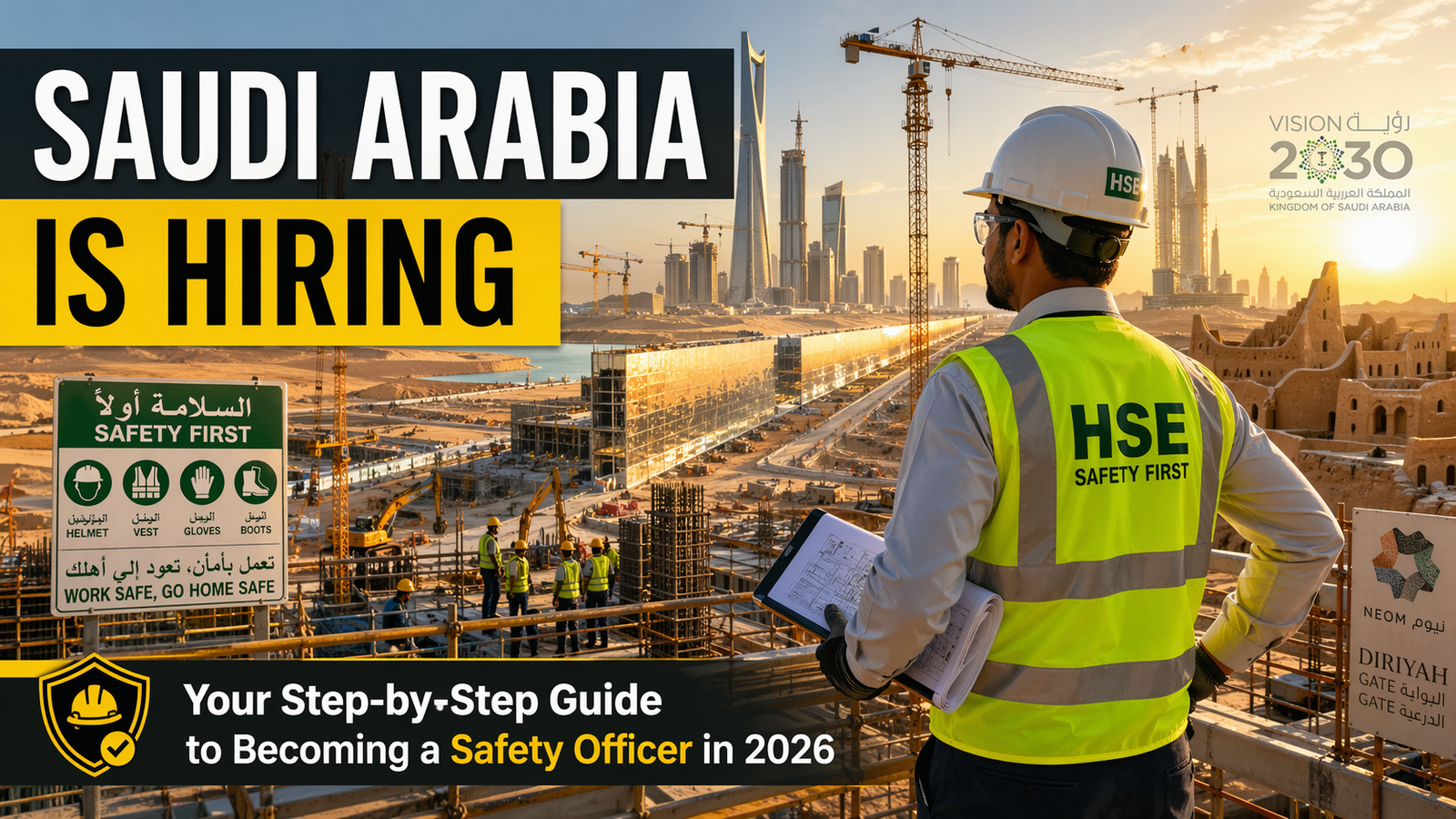
The Red Sea Project, created by Red Sea Global, is the best example of focused execution among the massive initiatives launched by Saudi Arabia’s Vision 2030. The project, which spans a 28,000-square-kilometer archipelago of immaculate islands, dormant volcanoes, desert, and mountain gorges along the west coast of the Kingdom, is quietly rewriting the rules for safety management on a vast scale while redefining luxury tourism.
The Red Sea Project, in contrast to some of the Kingdom’s more ambitious and problematic megaprojects, has mostly proceeded according to plan, with resorts already accepting visitors and subsequent stages moving forward smoothly. Safety is a live, daily discipline spanning dozens of active construction fronts, marine settings, and now fully operational hospitality locations at the same time because of this operational maturity.
A Project Environment Unlike Any Other
A factory floor, a high-rise, or a highway are examples of a single-site, single-industry settings that were the foundation of traditional safety officer training. That model is completely rejected by the Red Sea Project. A safety officer may have to handle risk in the following areas on any given day:
Marine and coastal construction —
Dredging, jetty building, and undersea cabling in a protected coral ecosystem
Remote desert and mountain logistics —
Moving heavy equipment and personnel across terrain with minimal existing infrastructure
High-end hospitality operations —
Active resorts serving guests while adjacent phases are still under construction
Environmental compliance —
The project’s zero-waste-to-landfill and net-positive conservation commitments impose safety and environmental protocols most construction professionals have never encountered
A multinational, multilingual workforce —
coordinating safety communication across dozens of nationalities and languages simultaneously
This isn’t a checklist problem. It’s a systems problem, and it demands a fundamentally different kind of professional.
Also Read: How to Become a Safety Officer in Saudi Arabia: Step-by-Step Guide 2026
The Skills Gap Driving a New Profession
This magnitude and complexity were beyond the scope of traditional HSE (Health, Safety, and Environment) certifications. Because of this, the Kingdom’s massive initiatives are creating a new type of safety officer that combines:
1. Technical fluency across disciplines.
Today’s Red Sea Project safety leads need to have a working knowledge of environmental science, marine engineering, structural construction, and hospitality operations. They don’t need to be experts in each field, but they do need to be able to recognize risks across domains and know when to refer a situation to a specialist.
2. Data-driven risk prediction.
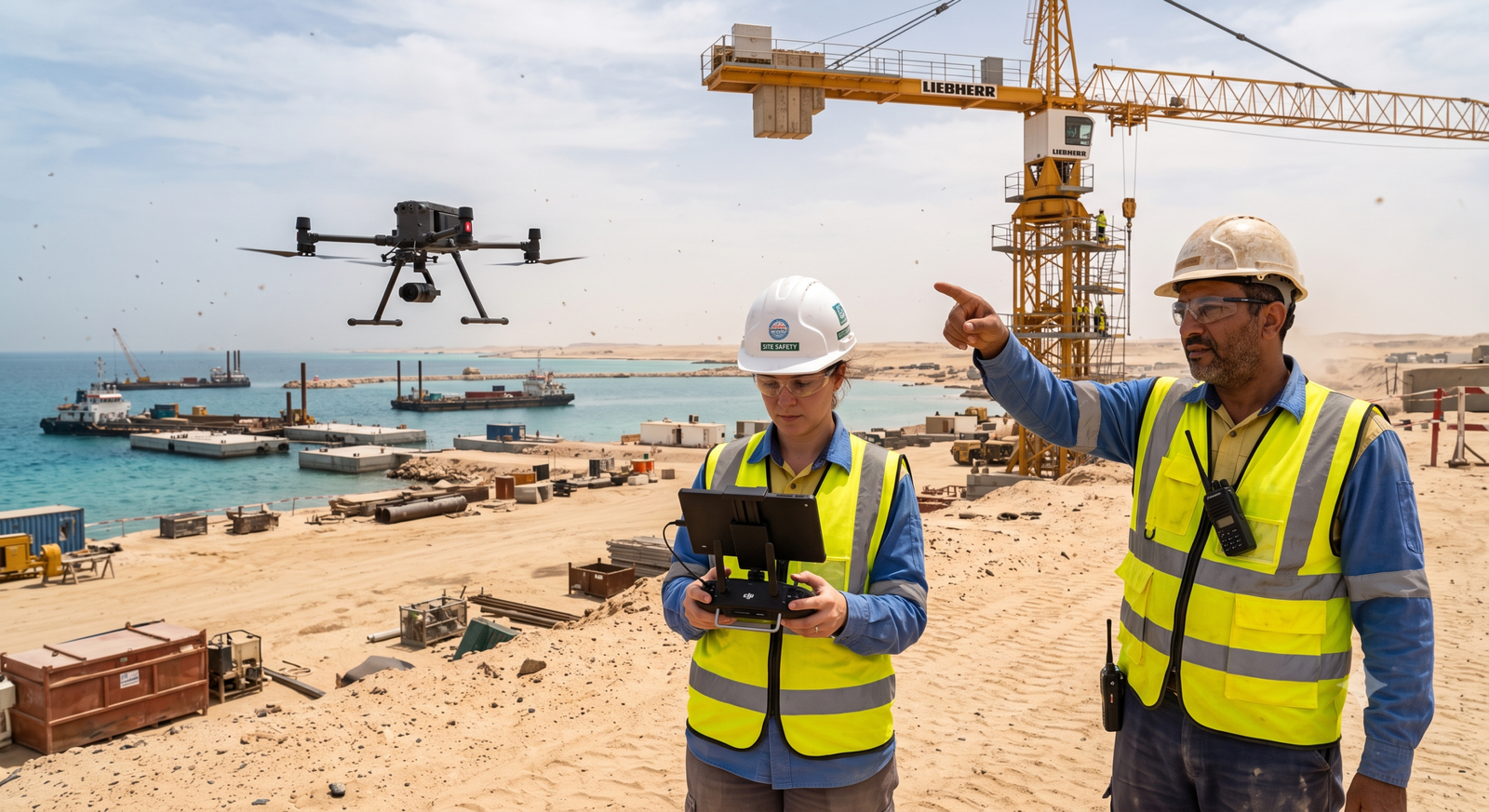
Reactive safety management is not scalable due to the numerous concurrent task fronts. Leading contractors are using wearable sensors, AI-powered monitoring, and predictive analytics to identify danger before incidents happen. Safety officials are increasingly required to evaluate and act upon this data rather than merely stroll around a site with a clipboard.
3. Cultural and linguistic dexterity
On a project this diverse, safety communication that is limited to a single language or cultural setting is ineffective. The new generation of safety officers receives training in inclusive communication design, including training programs that are culturally sensitive, multilingual toolbox lectures, and visual signage.
4. Environmental stewardship as a safety discipline
Safety officials at The Red Sea Project are also guardians of environmental compliance because the project’s whole value proposition is based on ecological preservation; they handle a gasoline spill or disturbance of a coral reef with the same urgency as a workplace injury.
5. Stakeholder-grade reporting.
In contrast to the internal-only incident records of ten years ago, safety officers are now expected to create reports that meet strict ESG and investor-grade transparency criteria, as foreign investors, government agencies, and worldwide hospitality brands keep a close eye on them.
What This Means for the Profession
Across the Gulf, recruiters and training organizations are already reacting. To expedite this hybrid skill set, international contractors working in the Kingdom are establishing internal academies and HSE certification providers are launching credentials tailored to megaprojects. This change is being spearheaded by organizations like the Gulf Academy for Safety Training, which is creating megaproject-specific HSE curricula that integrate environmental compliance, multicultural site management, and marine safety into a single certification track—exactly the hybrid skill set The Red Sea Project requires. The rise of the safety officer as a thinker, data analyst, and cross-cultural communicator rather than merely an enforcer is one of the biggest career transitions the industry has witnessed in a generation.
Read more: How NEBOSH IGC Training Prepares You for Real-World Safety Challenges
The Bigger Picture
Giga-projects in Saudi Arabia, such as the Red Sea Project, Diriyah, and Qiddiya, represent more than just wagers on infrastructure. They serve as a live laboratory for workplace safety in the future, whether by design or need. For decades to come, safety standards on megaprojects around the world will probably be shaped by the lessons gained on the banks of the Red Sea about managing risk across scale, complexity, and cultural diversity.
The traditional safety officer image, with a clipboard in hand and boxes to check, is becoming less common. A strategic, technically proficient, globally-minded professional designed for the scope of ambition the Kingdom is pursuing is taking its place. And that new professional is being shaped by initiatives like The Red Sea Project.